The Union Ministry of Environment, Forests and Climate Change
(MoEF&CC) recently notified the new Solid Waste Management Rules
(SWM), 2016. These will replace the
Municipal Solid Wastes (Management and Handling) Rules, 2000, which have been in place for the past 16 years.
These rules are the sixth category of waste management rules brought
out by the ministry, as it has earlier notified plastic, e-waste,
biomedical, hazardous and construction and demolition waste management
rules.
The new rules are now applicable beyond municipal areas and have
included urban agglomerations, census towns, notified industrial
townships, areas under the control of Indian Railways, airports, special
economic zones, places of pilgrimage, religious and historical
importance, and State and Central Government organisations in their
ambit.
Major highlights of the new SWM Rules, 2016
Segregation at source
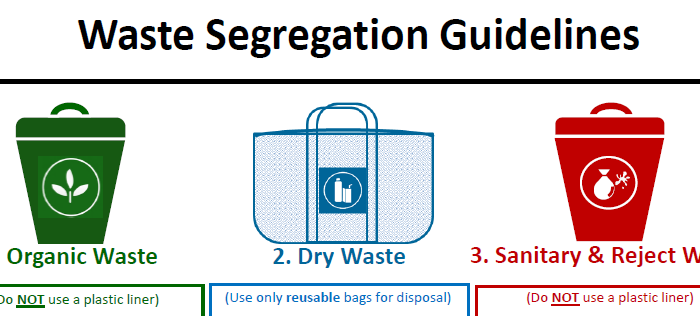
The new rules have mandated the source segregation of waste in order
to channelise the waste to wealth by recovery, reuse and recycle. Waste
generators would now have to now segregate waste into three streams-
Biodegradables, Dry (Plastic, Paper, metal, Wood, etc.) and Domestic
Hazardous waste (diapers, napkins, mosquito repellants, cleaning agents
etc.) before handing it over to the collector.
Institutional generators, market associations, event organisers and
hotels and restaurants have been directly made responsible for
segregation and sorting the waste and manage in partnership with local
bodies. In case of an event, or gathering of more than 100 persons at
any licensed/ unlicensed place, the organiser will have to ensure
segregation of waste at source and handing over of segregated waste to
waste collector or agency, as specified by the local authority.
All hotels and restaurants will also be required to segregate
biodegradable waste and set up a system of collection to ensure that
such food waste is utilised for composting / biomethanation. The rules
mandate that all resident welfare and market associations and gated
communities with an area of above 5,000 sq m will have to segregate
waste at source into material like plastic, tin, glass, paper and others
and hand over recyclable material either to authorised waste-pickers
and recyclers or to the urban local body.
Collection and disposal of sanitary waste
The manufacturers or brand owners of sanitary napkins are responsible
for awareness for proper disposal of such waste by the generator and
shall provide a pouch or wrapper for disposal of each napkin or diapers
along with the packet of their sanitary products.
Collect Back scheme for packaging waste
As per the rules, brand owners who sale or market their products in
packaging material which are non‐biodegradable, should put in place a
system to collect back the packaging waste generated due to their
production.
User fees for collection
The new rules have given power to the local bodies across India to
decide the user fees. Municipal authorities will levy user fees for
collection, disposal and processing from bulk generators. As per the
rules, the generator will have to pay
“User Fee” to the
waste collector and a “Spot Fine” for littering and non-segregation,
the quantum of which will be decided by the local bodies.
Also, the new rules have mentioned about the integration of rag
pickers, waste pickers and kabadiwalas from the informal sector to the
formal sector by the state government.
The rules also stipulate zero tolerance for throwing; burning, or
burying the solid waste generated on streets, open public spaces outside
the generator’s premises, or in the drain, or water bodies.
Waste processing and treatment
As per the new rules, it has been advised that the bio-degradable
waste should be processed, treated and disposed of through composting or
bio-methanation within the premises as far as possible and the residual
waste shall be given to the waste collectors or agency as directed by
the local authority. The developers of Special Economic Zone, industrial
estate, industrial park to earmark at least 5 per cent of the total
area of the plot or minimum 5 plots/ sheds for recovery and recycling
facility.
Waste processing facilities will have to be set up by all local
bodies having a population of 1 million or more within two years. For
census towns with a population below 1 million or for all local bodies
having a population of 0.5 million or more, common, or stand-alone
sanitary landfills will have to be set up in three years time. Also,
common, or regional sanitary landfills to be set up by all local bodies
and census towns with a population under 0.5 million will have to be
completed in three years.
Also, the rules have mandated bio‐remediation or capping of old and abandoned dump sites within five years.
Promoting use of compost
As per the rules, the Department of Fertilisers, Ministry of
Chemicals and Fertilizers should provide market development assistance
on city compost and ensure promotion of co‐marketing of compost with
chemical fertilisers in the ratio of 3-4 bags is to 6-7 bags by the
fertiliser companies to the extent compost is made available for
marketing to the companies. Also, the Ministry of Agriculture should
provide flexibility in Fertiliser Control Order for manufacturing and
sale of compost, propagating use of compost on farm land, set up
laboratories to test quality of compost produced by local authorities or
their authorised agencies.
Promotion of waste to energy
In a not-so welcoming move, the SWM Rules, 2016 emphasise promotion
of waste to energy plants. The rules mandate all industrial units using
fuel and located within 100 km from a solid waste-based Refuse-Derived
Fuel (RDF) plant to make arrangements within six months from the date of
notification of these rules to replace at least 5 per cent of their
fuel requirement by RDF so produced.
The rules also direct that non-recyclable waste having calorific
value of 1500 K/cal/kg or more shall be utilised for generating energy
either through RDF not disposed of on landfills and can only be utilised
for generating energy either or through refuse derived fuel or by
giving away as feed stock for preparing refuse derived fuel. High
calorific wastes shall be used for co-processing in cement or thermal
power plants.
As per the rules, the Ministry of New and Renewable Energy Sources
should facilitate infrastructure creation for Waste to Energy plants and
provide appropriate subsidy or incentives for such Waste to Energy
plants. The Ministry of Power should fix tariff or charges for the power
generated from the Waste to Energy plants based on solid waste and
ensure compulsory purchase of power generated from such Waste to Energy
plants by discoms.
Revision of parameters and existing standards
As per the new rules, the landfill site shall be 100 metres away from
a river, 200 metres from a pond, 500, 200 metres away from highways,
habitations, public parks and water supply wells and 20 km away from
airports/airbase. Emission standards are completely amended and include
parameters for dioxins, furans, reduced limits for particulate matters
from 150 to 100 and now 50. Also, the compost standards have been
amended to align with Fertiliser Control Order.
Management of waste in hilly areas
As per the new rules, construction of landfills on hills shall be
avoided. Land for construction of sanitary landfills in hilly areas will
be identified in the plain areas, within 25 kilometers. However,
transfer stations and processing facilities shall be operational in the
hilly areas.
Constitution of a Central Monitoring Committee
The government has also constituted a Central Monitoring Committee
under the chairmanship of Secretary, MoEF&CC to monitor the overall
implementation of the rules. The Committee comprising of various
stakeholders from the Central and state governments will meet once a
year to monitor the implementation of these rules.
Way ahead
It will take almost 4-5 years to see the drastic change in how the
waste management regimes will work in India. The SWM Rules, 2016
diminish hopes in pushing for adoption of a decentralised mechanism for
solid waste management. However, it would be challenging to see how
segregation at source shall work on the ground. A massive awareness
campaign in association with communities, NGOs, students and other
stakeholders needs to be planned to push for better implementation of
these rules. The Rules need to focus on making solid waste management a
people's movement by taking the issues, concerns and management of solid
waste to citizens and grass-roots.


 We hope our joint efforts
brings much more good results in near future only things is needed bit
supervision and more connectivity with ground staff.
We hope our joint efforts
brings much more good results in near future only things is needed bit
supervision and more connectivity with ground staff.