Showing posts with label MCD. Show all posts

Be the Change Agent, Dwarka Forum Joined hand with SDMC for Clean Dwarka


We all have dreams. But in order to make dreams come into reality, it takes an awful lot of determination, dedication, self-discipline, and effort.-- Jesse Owens

Dwarka Forum also have a dream for clean and green dwarka. It's continious effort through email, letters, meetings, workshop suggestions etc etc to mayor, deputy mayor, commissioner-sdmc, deputy commissioner-sdmc finally bought some ground results. After so many workshop in different societies people started doing segregation and composting. 
 

Seeing the sweeping condition of road, DF suggested deputy commissioner for scheduled sweeping which he agreed and weekly schedule has been provided to sdmc staff. DF team supervise their work everyday which includes road sweeping and garbage collection. Results are worth appreciating. This is just a begining...have to go long way. Residents of area started coming out, watchful and took initiative.


Dwarka Forum appreciate and thankful to Deputy Commissioner Sh Sanjeev ji's for his whole hearted cooperation. He not only use to do surprise visit to dwarka but also take updates on progress.

We hope our joint efforts brings much more good results in near future only things is needed bit supervision and more connectivity with ground staff.

Dwarka Forum & SDMC joins hand to Fight against Dengue ,Chikungunya and Garbage Disposal


Seeing the worsening situation & outbreak of Vector Borne diseases like Dengue and Chikungunya in Dwarka; Dwarka Forum took a lead and joined hands with SDMC.  Members of forum met DC Najafgarh Sh Sanjeev Kumar today at Sec-23 Community Hall, Dwarka and demanded focus on fogging in schools, DDA Pockets and Group Housing societies on priority, segregation to reduce load on landfills, requested for efficient garbage pick-up and emphasized on decentralised composting.

Dwarka Forum members apprised Sh. Sanjeev Kumar regarding all the points and their present status of all the action points which were discussed during previous meetings. 


Dwarka Forum demanded a road map of garbage pick-up trucks so that it can be optimized for maximum output. At the same time, forum asked DC to help with providing dustbins-carts for the societies near dhalao to reduce burden on trucks.

Both Dwarka Forum and DC agreed that all the dhalaos should work as composting sites and MCD should only pick segregated garbage from the society as per MCD’s new notification on garbage segregation. However, Dwarka Forum pressed that MCD should provide support to the forum to educate all societies in Dwarka and provide RWAs with all kind of assistance they require to initiate segregation and composting at source.


Dwarka Forum has been visiting societies of Dwarka to help RWAs and residents adopt the segregation and composting techniques. So far, few societies have already adopted the model and have zero garbage to dispose.

On the request of a member, DC also assured installation of limited open Gyms in MCD parks. He asked forum to identify parks.

DC Sh Sanjeev Kumar assured Dwarka Forum for all possible support and corrective measurements to control Dengue and chikungunya and also for proper disposal of garbage.


Waste Segregation - Tips and Tricks

Waste Segregation - Tips and Tricks


Tips and tricks – waste segregation

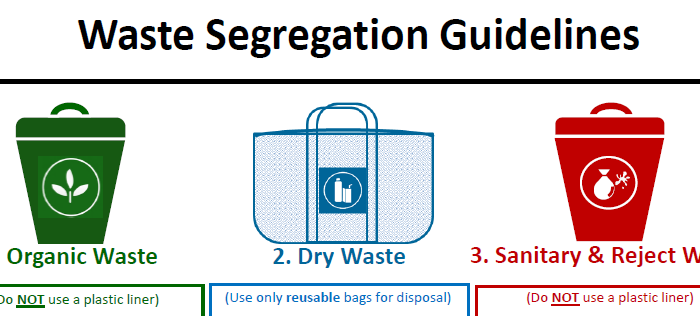
Here are some guidelines for successful waste segregation. These will ensure that most of the waste we generate gets composted or recycled, and does NOT end up in a landfill.
Dry waste (recyclable waste)

    • Pickup of dry waste happens thrice weekly – Monday, Thursday and Saturday. Please leave dry waste out ONLY on the designated days.
    • Please do NOT put dry waste into the red or green bins as otherwise FCs have to dig in and separate this. Use a jute bag for disposal (if you don’t have one, please buy this. Till then, use ANY large plastic bag with ONLY dry waste.
    • Milk packets/dosa batter/curd packets are not to be disposed in the green bin. Please rinse, and once dry you can dispose in the bag for recycling. [Tip: cut and leave soiled plastics at the bottom of your kitchen sink. They will get rinsed when the dishes are washed]
    • All scraps of paper, plastic, empty cosmetic/medicine bottles, broken mops/brooms, anything made of plastic/paper/metal/glass should go in the dry waste bag.
    • Food containers made from Aluminium foil or plastic can be easily recycled! Please rinse (along with your other dishes) and dispose in your dry waste bag.
    • Do rinse tetrapacks also (milk/juice/tomato puree etc) and dispose in the dry waste bag.
Wet waste (biodegradable kitchen waste)

    • Kitchen waste should be disposed off in a GREEN bucket without any plastic lining. If you do not have a green bucket, please purchase one or for now use what you have, but please ensure there is NO plastic in this whatsoever.
    • If you are throwing leftover food, please drain excess liquid in the sink before disposing, or if very watery, flush down the toilet. [Tip: leave leftover food in the fridge and throw in the morning just before waste collection, to avoid smell]
    • All veg and non-veg waste too is biodegradable and MUST be thrown in the green bin. Egg shells and tea bags can be thrown as well.
    • You can line your bin with paper but please use a single sheet and not the whole newspaper! You can check out the attached paper bags which are available through Town Essentials.
Rejects waste (sanitary waste)

    • Sanitary waste should be wrapped in newspaper, marked with an X, and disposed off in the RED bin. Please do this so that waste workers may be able to identify it easily and not have to handle it directly.
    • If you do not have a red bin, please use any other bin you may have, as long as it is kept separate from kitchen waste
    • Also a reminder to NEVER flush your sanitary waste as it clogs the sewage pipes.
    • Sanitary waste and all contents of RED bin go to the landfill, so please try to minimize this as much as possible. All plastics can and should be recycled – please rinse soiled plastic and use the bag to dispose, NOT the red bin.
Finally, here are some alternatives for your consideration which are safer for you and your family, and better for the planet that we leave behind for the next generation:
1. Bumberry makes reusable cloth diapers free from harmful chemical additives normally used to bleach regular diapers.
2. Ecofemme makes washable sanitary pads that are safer for your body. The organization has a social welfare aspect as well.
3. Shecup and Divacup are menstrual cups that are used by many women as alternatives to disposable pads and tampons.

Here’s to adopting more sustainable lifestyles and practices!
Cheers,

Dwarka Forum
Source: Internet

SDMC and Dwarka Forum joined hands to fight against Dengue, Chikungunya & Garbage disposal


Seeing the worsening situation & outbreak of Vector Borne diseases like Dengue and Chikungunya in Dwarka; Dwarka Forum took a lead and joined hands with SDMC.  Members of forum met DC Sh Sanjeev kumar today at Sec-23 Community Hall, Dwarka and demanded focus on fogging in schools, DDA Pockets and Group Housing societies on priority, segregation to reduce load on landfills, requested for efficient garbage pick-up and emphasized on decentralised composting.


Dwarka Forum members apprised Sh. Sanjeev Kumar regarding all the points and their present status of all the action points which were discussed during previous meetings. 

Dwarka Forum demanded a road map of garbage pick-up trucks so that it can be optimized for maximum output. At the same time, forum asked DC to help with providing dustbins-carts for the societies near dhalao to reduce burden on trucks.

Both Dwarka Forum  and DC agreed that all the dhalaos should work as composting sites and SDMC should only pick segregated garbage from the society as per MCD’s new notification on garbage segregation. However, Dwarka Forum pressed that SDMC should provide support to Dwarka Forum in educating the residents to initiate segregation and composting at source.

Dwarka Forum maintained that daily cleaning and picking up of garbage was not up to the mark and safayee karamcharis were often found absconded from their duty. DC took contingence of the same and promised to work with Dwarka Forum on ground every Saturday by visiting various sectors.

Dwarka Forum has been conducting awareness campaign on segregation and composting techniques in various societies.

On the request of a member, DC also assured installation of limited open Gyms in MCD parks. He asked Dwarka Forum to identify parks.

99 Per Cent Of Sweden's Garbage Is Now Recycled

SWEDEN RECYCLING
 There’s a “recycling revolution” happening in Sweden – one that has pushed the country closer to zero waste than ever before. In fact, less than one per cent of Sweden's household garbage ends up in landfills today.

The Scandinavian country has become so good at managing waste, they have to import garbage from the UK, Italy, Norway and Ireland to feed the country’s 32 waste-to-energy (WTE) plants, a practice that has been in place for years.

“Waste today is a commodity in a different way than it has been. It’s not only waste, it’s a business,” explained Swedish Waste Management communications director Anna-Carin Gripwell in a statement.

Every year, the average Swede produces 461 kilograms of waste, a figure that's slightly below the half-ton European average. But what makes Sweden different is its use of a somewhat controversial program incinerating over two million tons of trash per year.

It’s also a process responsible for converting half the country’s garbage into energy.

“When waste sits in landfills, leaking methane gas and other greenhouse gasses, it is obviously not good for the environment,” Gripwell said of traditional dump sites. So Sweden focused on developing alternatives to reduce the amount of toxins seeping into the ground.


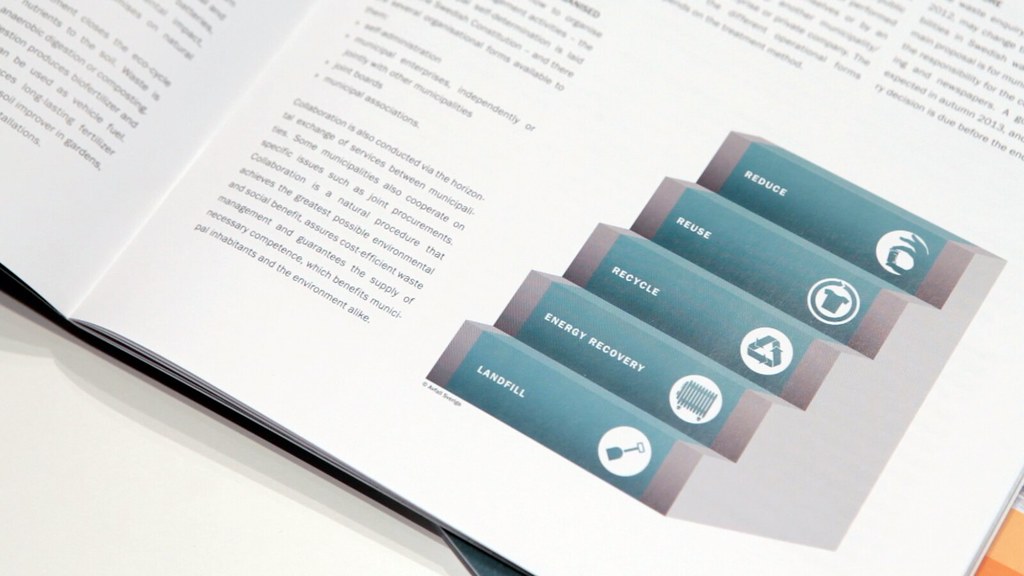
At the core of Sweden’s program is its waste-management hierarchy designed to curb environmental harm: prevention (reduce), reuse, recycling, recycling alternatives (energy recovery via WTE plants), and lastly, disposal (landfill).

Before garbage can be trucked away to incinerator plants, trash is filtered by home and business owners; organic waste is separated, paper picked from recycling bins, and any objects that can be salvaged and reused pulled aside.

By Swedish law, producers are responsible for handling all costs related to collection and recycling or disposal of their products. If a beverage company sells bottles of pop at stores, the financial onus is on them to pay for bottle collection as well as related recycling or disposal costs.

Rules introduced in the 1990s incentivized companies to take a more proactive, eco-conscious role about what products they take to market. It was also a clever way to alleviate taxpayers of full waste management costs.

According to data collected from Swedish recycling company Returpack, Swedes collectively return 1.5 billion bottles and cans annually. What can't be reused or recycled usually heads to WTE incineration plants.

Sweden's waste management hierarchy: reduce, reuse, recycle, energy recovery, then landfill. (Flickr)


WTE plants work by loading furnaces with garbage, burning it to generate steam which is used to spin generator turbines used to produce electricity. That electricity is then transferred to transmission lines and a grid distributes it across the country.

In Helsingborg (population: 132,989), one plant produces enough power to satisfy 40 per cent of the city’s heating needs. Across Sweden, power produced via WTE provides approximately 950,000 homes with heating and 260,000 with electricity.

Recycling and incineration have evolved into efficient garbage-management processes to help the Scandinavian country dramatically cut down the amount of household waste that ends up in landfills. Their efforts are also helping to lower its dependency on fossil fuels.


 “A good number to remember is that three tons of waste contains as much energy as one ton of fuel oil … so there is a lot of energy in waste,” said Gรถran Skoglund, spokesperson for ร–resundskraft, one of the country’s leading energy companies.

So if Sweden burns approximately two million tons of waste annually, that produces roughly 670,000 tons worth of fuel oil energy. And the country needs that fuel to operate its well-developed district heating networks which heat homes in Sweden's cold winters.

This is why the country has taken advantage of the fact a number of European nations don’t have the capacity to incinerate garbage themselves due to various taxes and bans across the EU that prevent landfill waste. There's where Sweden comes in to buy garbage other countries can't dispose of themselves at a reasonable cost.

For more inforamtion ,visit :http://www.huffingtonpost.ca/2014/09/02/sweden-recycling_n_5738602.html


Swachh Bharat: Now, click pictures of dirty places and post on app to alert MC


Cover art
  Swachhata-Swachh Bharat App
Now each you have tool in hand. Please download these two app - swachhata and swachbharat and keep posting  the pics. The more the better. Spread the word in your area and society. Everyone has the cell phone in hand. Put them to full use.

Dwarka Forum urge -everyone to use this  app,  click pics of garbage and send it. Simple.

Garbage dumped at Charan Singh Colony at Mauljagran in Chandigarh . Express file photo

The Swachh Bharat application, which is an initiative of the Ministry of Urban Development, is launched across the country on August 6, 2016.

How Will it work?

All the officers of the municipal corporation will get themselves registered in the app. Once a resident posts a picture of a dirty and an unclean area, the official concerned will be asked to get it cleaned immediately.


Anybody will be able to download the app on an Android phone.
Cover art

Swachhata-Swachh Bharat App

 “Instead of calling up the officials of medical officer of health department and requesting them time and again to get a particular area cleaned, this app will help the residents. Once a picture is posted on the app, status of the same will also be uploaded by the official concerned”.

Frequent posting of pictures from the same sector will also give an idea to the senior officers about the ground reality and the way sweepers are working.

“With this even the senior officers can get to know if the area is actually being cleaned by the sweepers or not and responsibility can be fixed”.

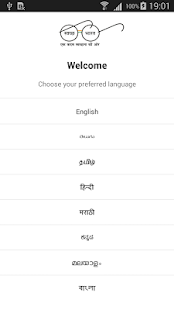
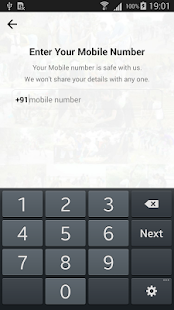
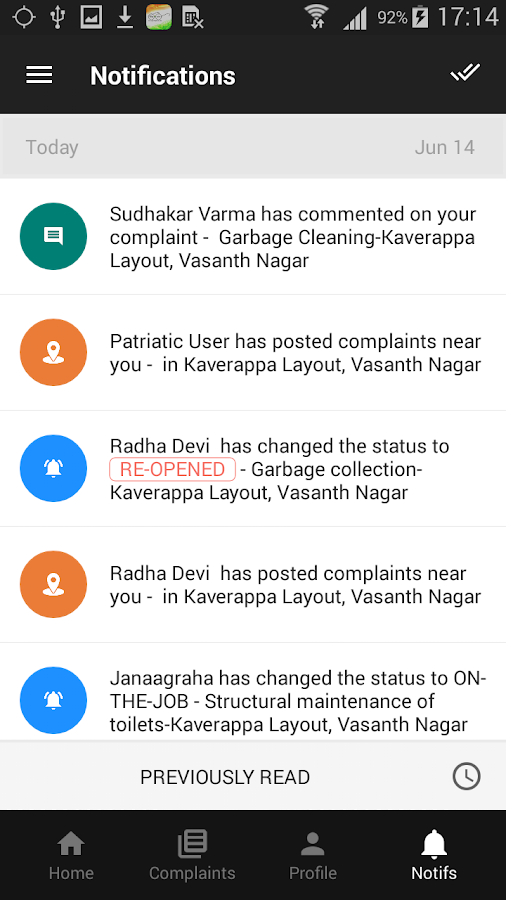
  Swachhata-Swachh Bharat App- screenshot thumbnail     Swachhata-Swachh Bharat App- screenshot thumbnail     Swachhata-Swachh Bharat App- screenshot thumbnail
   Swachhata-Swachh Bharat App- screenshot  https://lh3.googleusercontent.com/Z6-9SmTzNdxQhNxDjViXrIst0Y4oqf1lDmtJ8sutBdbRy38DdlxgOhtw4AVrURrKlDk=h900https://lh3.googleusercontent.com/Z6-9SmTzNdxQhNxDjViXrIst0Y4oqf1lDmtJ8sutBdbRy38DdlxgOhtw4AVrURrKlDk=h900 
 The Swachhata -Swachh Bharat app is the official app of The Government of India’s Swachh Bharat Mission (SBM).

The app enables a citizen to post a ‘swachh’ issue (eg; a garbage dump) which is then sent to the city corporation concerned and thereafter assigned to the sanitary inspector of the particular ward .
The app has been built by IChangeMyCity – a division of Janaagraha -as part of its Swachhata Solutions. Janaagraha is a Bengaluru based non-profit working to improve the quality of life in India’s cities and towns.
Process flow:
Take a picture of a garbage dump or any ‘Swachh’ related issue using your smart phone camera.
Following are the Swachh categories:
  • Garbage collection
  • Garbage cleaning
  • Cleanliness of public toilets
  • Dead animals
  • Structural maintenance of public toilets 

The app will capture the location while the picture is being taken.
You need to type in the landmark of the complaint location.
Post the Complaint using the app and it would reach your city corporation.
The complaint will thereafter be assigned to the concerned sanitary inspector/engineer in the area of the posted complaint. You can also vote up on any other complaint which is relevant to you.
You will get regular updates on status of the complaint in the form of a push notification.
You will get a push notification with the ‘Resolved’ image uploaded by the sanitary inspector/engineer when he changes the status to Resolved.
The citizen can reopen the complaint if he is not satisfied with the resolution of the complaint.
As your complaint gets resolved, give your feedback with a smiley.


Government notifies new solid waste management rules (SWM Rule 2016)

The Union Ministry of Environment, Forests and Climate Change (MoEF&CC) recently notified the new Solid Waste Management Rules (SWM), 2016. These will replace the Municipal Solid Wastes (Management and Handling) Rules, 2000, which have been in place for the past 16 years.
These rules are the sixth category of waste management rules brought out by the ministry, as it has earlier notified plastic, e-waste, biomedical, hazardous and construction and demolition waste management rules.


The new rules are now applicable beyond municipal areas and have included urban agglomerations, census towns, notified industrial townships, areas under the control of Indian Railways, airports, special economic zones, places of pilgrimage, religious and historical importance, and State and Central Government organisations in their ambit.

Major highlights of the new SWM Rules, 2016
Segregation at source
The new rules have mandated the source segregation of waste in order to channelise the waste to wealth by recovery, reuse and recycle. Waste generators would now have to now segregate waste into three streams- Biodegradables, Dry (Plastic, Paper, metal, Wood, etc.) and Domestic Hazardous waste (diapers, napkins, mosquito repellants, cleaning agents etc.) before handing it over to the collector.
Institutional generators, market associations, event organisers and hotels and restaurants have been directly made responsible for segregation and sorting the waste and manage in partnership with local bodies. In case of an event, or gathering of more than 100 persons at any licensed/ unlicensed place, the organiser will have to ensure segregation of waste at source and handing over of segregated waste to waste collector or agency, as specified by the local authority.
All hotels and restaurants will also be required to segregate biodegradable waste and set up a system of collection to ensure that such food waste is utilised for composting / biomethanation. The rules mandate that all resident welfare and market associations and gated communities with an area of above 5,000 sq m will have to segregate waste at source into material like plastic, tin, glass, paper and others and hand over recyclable material either to authorised waste-pickers and recyclers or to the urban local body.

Collection and disposal of sanitary waste
The manufacturers or brand owners of sanitary napkins are responsible for awareness for proper disposal of such waste by the generator and shall provide a pouch or wrapper for disposal of each napkin or diapers along with the packet of their sanitary products.
Collect Back scheme for packaging waste
As per the rules, brand owners who sale or market their products in packaging material which are non‐biodegradable, should put in place a system to collect back the packaging waste generated due to their production.

User fees for collection
The new rules have given power to the local bodies across India to decide the user fees. Municipal authorities will levy user fees for collection, disposal and processing from bulk generators. As per the rules, the generator will have to pay User Fee” to the waste collector and a “Spot Fine” for littering and non-segregation, the quantum of which will be decided by the local bodies.   
Also, the new rules have mentioned about the integration of rag pickers, waste pickers and kabadiwalas from the informal sector to the formal sector by the state government.
The rules also stipulate zero tolerance for throwing; burning, or burying the solid waste generated on streets, open public spaces outside the generator’s premises, or in the drain, or water bodies.

Waste processing and treatment
As per the new rules, it has been advised that the bio-degradable waste should be processed, treated and disposed of through composting or bio-methanation within the premises as far as possible and the residual waste shall be given to the waste collectors or agency as directed by the local authority. The developers of Special Economic Zone, industrial estate, industrial park to earmark at least 5 per cent of the total area of the plot or minimum 5 plots/ sheds for recovery and recycling facility.
Waste processing facilities will have to be set up by all local bodies having a population of 1 million or more within two years. For census towns with a population below 1 million or for all local bodies having a population of 0.5 million or more, common, or stand-alone sanitary landfills will have to be set up in three years time. Also, common, or regional sanitary landfills to be set up by all local bodies and census towns with a population under 0.5 million will have to be completed in three years.
Also, the rules have mandated bio‐remediation or capping of old and abandoned dump sites within five years.

Promoting use of compost
As per the rules, the Department of Fertilisers, Ministry of Chemicals and Fertilizers should provide market development assistance on city compost and ensure promotion of co‐marketing of compost with chemical fertilisers in the ratio of 3-4 bags is to 6-7 bags by the fertiliser companies to the extent compost is made available for marketing to the companies. Also, the Ministry of Agriculture should provide flexibility in Fertiliser Control Order for manufacturing and sale of compost, propagating use of compost on farm land, set up laboratories to test quality of compost produced by local authorities or their authorised agencies.

Promotion of waste to energy
In a not-so welcoming move, the SWM Rules, 2016 emphasise promotion of waste to energy plants. The rules mandate all industrial units using fuel and located within 100 km from a solid waste-based Refuse-Derived Fuel (RDF) plant to make arrangements within six months from the date of notification of these rules to replace at least 5 per cent of their fuel requirement by RDF so produced.
The rules also direct that non-recyclable waste having calorific value of 1500 K/cal/kg or more shall be utilised for generating energy either through RDF not disposed of on landfills and can only be utilised for generating energy either or through refuse derived fuel or by giving away as feed stock for preparing refuse derived fuel. High calorific wastes shall be used for co-processing in cement or thermal power plants.
As per the rules, the Ministry of New and Renewable Energy Sources should facilitate infrastructure creation for Waste to Energy plants and provide appropriate subsidy or incentives for such Waste to Energy plants. The Ministry of Power should fix tariff or charges for the power generated from the Waste to Energy plants based on solid waste and ensure compulsory purchase of power generated from such Waste to Energy plants by discoms.
Revision of parameters and existing standards
As per the new rules, the landfill site shall be 100 metres away from a river, 200 metres from a pond, 500, 200 metres away from highways, habitations, public parks and water supply wells and 20 km away from airports/airbase. Emission standards are completely amended and include parameters for dioxins, furans, reduced limits for particulate matters from 150 to 100 and now 50. Also, the compost standards have been amended to align with Fertiliser Control Order.
Management of waste in hilly areas
As per the new rules, construction of landfills on hills shall be avoided. Land for construction of sanitary landfills in hilly areas will be identified in the plain areas, within 25 kilometers. However, transfer stations and processing facilities shall be operational in the hilly areas.
Constitution of a Central Monitoring Committee
The government has also constituted a Central Monitoring Committee under the chairmanship of Secretary, MoEF&CC to monitor the overall implementation of the rules.   The Committee comprising of various stakeholders from the Central and state governments will meet once a year to monitor the implementation of these rules.
Way ahead
It will take almost 4-5 years to see the drastic change in how the waste management regimes will work in India. The SWM Rules, 2016 diminish hopes in pushing for adoption of a decentralised mechanism for solid waste management. However, it would be challenging to see how segregation at source shall work on the ground. A massive awareness campaign in association with communities, NGOs, students and other stakeholders needs to be planned to push for better implementation of these rules. The Rules need to focus on making solid waste management a people's movement by taking the issues, concerns and management of solid waste to citizens and grass-roots.


Let's Unite Dwarka !! DELIMITATION exercise for MCD Wards

Let's Unite Dwarka !!
INJUSTICE to DWARKA : Are you aware of these facts: Dwarka Sub-city population is bigger than Chandigarh with approximately 15 KM Radius and 5648 Hector Area and 396 KM Road Length. Currently Dwarka Sub-City (Sector 1 to 26) is divided into 5 MCD Wards such as Ward No.135 Kakraula, 136- Matiala, 141-Bijwasan, 145-Palam, 147- Mahavir Enclave. Dwarka have over 300 CGHS and over 50 DDA Pocket RWA's.

You may also aware that Dwarka Assembly Constituency is somewhere in Dabri/Jankpuri Side and not represent Dwarka Sub-City. 

The Delhi State Election Commission announced DELIMITATION exercise for MCD Wards.
Do you agree that all Sectors of Dwarka to be under One or Two Wards Maximum.
Either divide by Road NO. 202(Central Road) or by Metro Line.
Then make all the sectors in respective side as Two Wards. One may be called South Dwarka and other North Dwarka.


Currently some of the Sectors such as 1,2,3, 7, 8 13,14 19, 21 are some other wards.

Please have your views on this.. .


Notice received from SDMC in compliance with Waste Management Rule 2016

We are happy to share with you an important Notice received from South Delhi Municipal Corporation in compliance with Waste Management Rule 2016.

All are requested to share this with respective CGHS(MC) RWA(DDA Pockets/Plots) & Market Association among the shops.

Appreciate all cooperation.

Team- DF


Letter to SDMC Commisioner Dec2012

Letter to SDMC Commisioner Dec2012


Letter to SDMC Commisioner Dec2012.pdf


New Delhi, 31 December 2012

DF/SDMC/12/001


PERSONAL ATTN: Shri. RAJESH GAHLOT - Standing Committee Chairman

PERSONAL ATTN: Shri. MANISH GUPTA –Commissioner - SDMC


Respected Sir

Subject:  Creamation Ground Dwarka- URGENT Improvement & Suggestions from 355 RWA/CGHS/MTA of Dwarka and Neighbouring Villages.  


As you all aware that the INDIA's DAUGHTER- DAMNI was cremated at Sector 24, Dwarka Cremation Ground in wee hours.

We would like SDMC to decide on the following  URGENTLY:
  1. Immediately organise the Sanitation , Horticulture and Civil Engineering team at site cleaning the area around
  2. The Civil Team need to re carpet the entire approach road and parking.
  3. The Standing Committee must consider calling an Architect for make over and improve- This need to put on FAST TRACK.
  4. There is NO LIGHTS or even Electricity supply to the cremation- Immediately organise this.
  5. There must be ample benches and shelter to be created.
  6. Please get the CNG Cremation System in working.
  7. A Spacious Hall may be constructed in Memory of Damini.
  8. Carpet, Chairs, Air Cooled, Speakers & Amplifier for Kirtan, Shoe Racks & Potable Water
We appreciate your good office response to this matter URGENTLY.


With kind regards
For and on behalf of Dwarka Forum(Regd.)

President
Action :
  1. EnC, SDMC 
  2. DC, SDMC, Najafgarh Zone 

Dwarka Forum Discussion Group

Latest Posts

Recent Posts Widget